Lead candidate
PHP53-nb
A first-in-class humanized nanobody showing strong anti-tumor efficacy, low toxicity, and a novel mechanism of action in company-reported preclinical studies. Investigational — not FDA approved.
What is PHP53-nb?
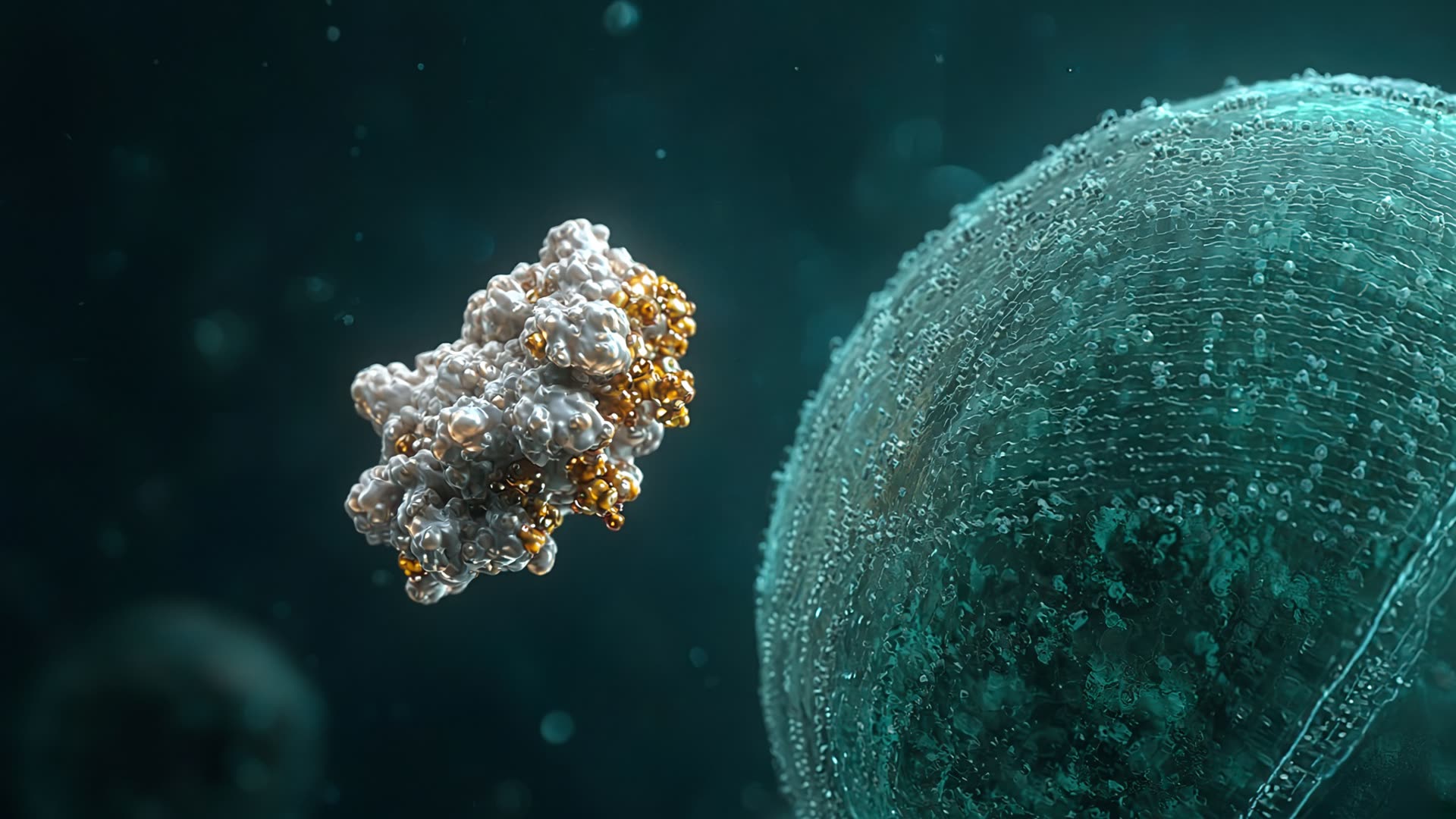
PHP53-nb is a patented nanobody with no linkers that internalizes within cancer cells, initiating reactivation of p53 protein and leading to apoptosis. It combines two innovations: the p53-reactivating peptide 3-NAntC and the humanized camelid nanobody delivery platform GEN01-AD.
- Modality
- Humanized camelid nanobody
- Payload
- 3-NAntC peptide (genetically integrated)
- Size
- ~17 kDa
- Expression
- CHO cells, standard bioprocessing
- Focus indications
- TNBC; other TP53-altered solid tumors
- Status
- Preclinical; Phase I anticipated 2027
How it works
01
Selective tumor binding
PHP53-nb preferentially engages a tumor-associated membrane ligand, supporting selectivity for biologically defined tumor subpopulations rather than unselected tissue.
02
Endocytosis
The nanobody enters the cell through clathrin-coated vesicles — a first-in-class intracellular biologic route for this payload — rather than remaining at the cell surface.
03
Cytoplasmic release
After internalization, PHP53-nb leaks into the cytoplasm, where the genetically integrated 3-NAntC peptide can act without chemical linkers or conjugation steps.
04
Stress and p53 reactivation
Proteasome modulation, rising reactive oxygen species, and endoplasmic reticulum stress trigger the unfolded protein response and restore p53 apoptotic signaling.
05
Mitochondrial collapse
Mitochondrial permeabilization follows, committing the cancer cell to apoptosis while benign control lines in published summaries remain comparatively spared.